
· by Michael Blair, Nashville's Pest Control
Ticks are found year-round in Tennessee, and University of Tennessee entomologists say the population is growing, with people running into them in their own backyards. The first instinct after finding one on a child or the dog is to spray the whole yard. A treatment has its place, but where ticks actually live on a lot decides most of what works, and that part comes down to shade, leaf litter, mowing and where the swing set sits.
Which ticks are in Middle Tennessee yards?
Five species are the ones commonly found on Tennessee people and pets, according to the UT Institute of Agriculture: the lone star tick, the American dog tick, the black-legged tick, the Gulf Coast tick and the longhorned tick.
The same UTIA release lists what tick bites can lead to: Lyme disease, Rocky Mountain spotted fever, ehrlichiosis and anaplasmosis, along with tick paralysis and alpha-gal syndrome. It also notes that ticks turn up in every month of the year here, so a warm week in January is not a free pass.
Where do ticks live in a yard?
In shade, leaf litter, tall grass and the strip where the lawn meets the trees, far more than in open, sunny lawn. UTIA’s advice turns on that: ticks dry out in open sun, so they hold to shaded, overgrown, grassy and wooded spots.
A University of Tennessee study put distances on it for the lone star tick. C. G. Morris’s 1999 thesis sampled woods, woods edges and open grassy areas at Fairfield Glade on the Cumberland Plateau. That is not the Nashville Basin, so read the numbers as a pattern rather than a local count. Larval masses were thickest 5 and 10 meters into the woods, nymphs about 10 meters in, and adults were caught more often in wooded habitat in spring. Golf course and roadside sites came out the same.
On a lot in Franklin or anywhere else that backs onto a tree line, that points to the back strip of the yard and the first several yards of woods. The middle of the lawn, where the kids play in full sun, is the least likely place to pick one up.
What yard changes cut down on ticks?
The ones that make the edge drier, shorter and farther from where people spend time. The CDC’s page on preventing tick bites lists the yard measures, and each one works on that same habitat.
Several of them also help with the other summer complaint; mosquitoes in your yard covers that side.
- A strip of wood chips or gravel about three feet wide between the lawn and the woods
- Leaf litter raked out, especially along the tree line
- The lawn mowed often so the grass stays short
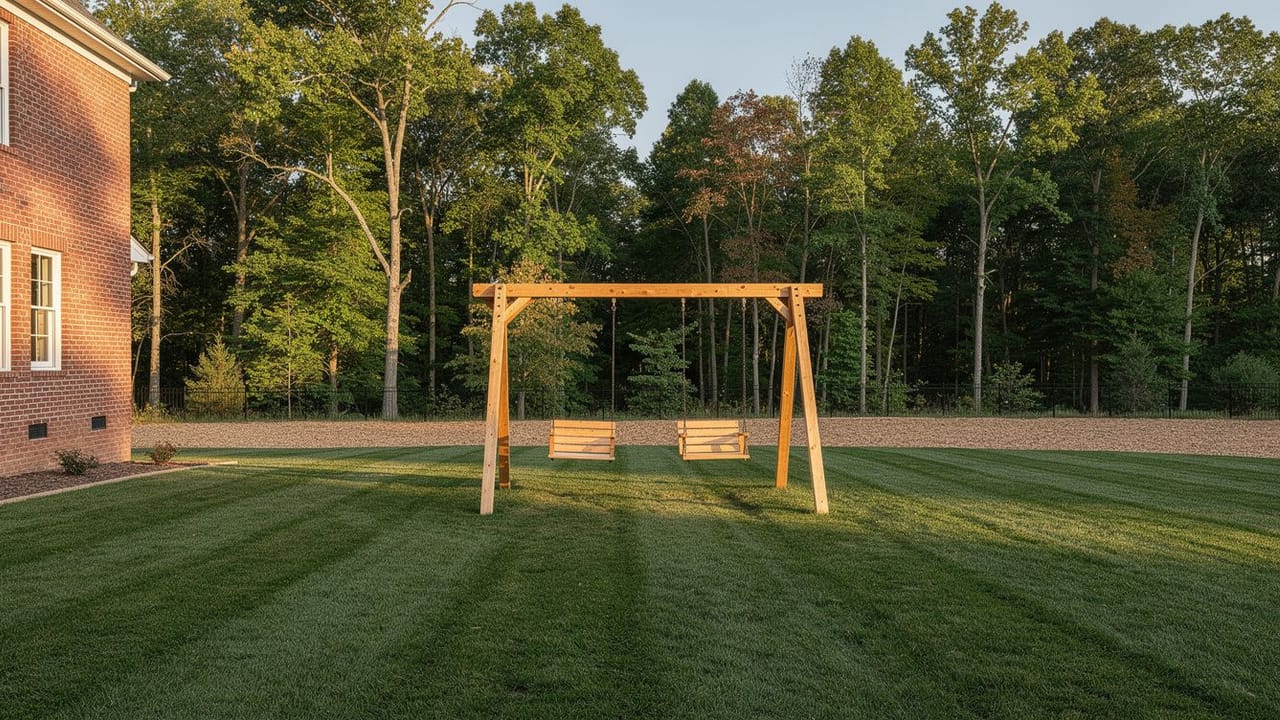
- Swing sets, decks and patios kept away from the edges of the yard and from the trees
What can a yard treatment do for ticks?
It can reduce ticks where it is applied, and that is its limit. The CDC says pesticides can lower the number of ticks in treated areas, and in the same breath says you should not count on spraying to lower your risk of infection.
So a treatment belongs on the habitat, not broadcast across the front lawn: the tree line, the leaf litter, the shaded beds and the paths the dog runs. It works alongside the yard changes above and the personal steps UTIA lists, which are to shower within two hours of coming indoors, run outdoor clothes through the dryer on high heat, and see a medical provider if a fever or rash shows up within 30 days of a bite.
Ticks fall under our general pest control service. We walk the lot first and show you where the edge habitat is before anything is applied. Ask us for an estimate and tell us what backs onto your yard.
Sources
- University of Tennessee Institute of Agriculture, “Protect Yourself and Pets from Ticks: UTIA Entomologists Host Workshops in June” (June 2026) — Ticks found year-round in Tennessee; the five common species; diseases and conditions including alpha-gal syndrome; populations rising, including in residential backyards; ticks dry out in open sun; shower within two hours, dry clothes on high heat, see a provider for fever or rash within 30 days.
- Centers for Disease Control and Prevention, Preventing Tick Bites — Yard measures: a three-foot wood chip or gravel barrier, removing leaf litter, frequent mowing, play equipment and patios away from yard edges and trees; pesticides reduce ticks in treated areas but should not be relied on to reduce infection risk.
- C. G. Morris, Adjacent Habitat Distribution and Management of the Lone Star Tick in Tennessee, University of Tennessee thesis (1999) — Cumberland Plateau (Fairfield Glade) sampling of woods, edge and open grass: larvae most abundant 5 and 10 m into the woods, nymphs 10 m in, adults more in wooded habitat in spring; no difference between golf course and roadside sites.
FAQ
Ticks in the Yard: Where They Live and What Helps — questions
Why are there so many ticks in my yard?
Usually because the yard gives them shade and cover: leaf litter, tall grass, overgrown beds and a woods edge close to the lawn. Ticks dry out in open sun, so they collect where it is shaded and damp. UT entomologists also report that tick numbers in Tennessee are rising, including in residential backyards.
Can you spray for ticks in yard?
Yes. A pesticide treatment can reduce ticks in the areas it covers, which is why it goes on the tree line, leaf litter and shaded beds rather than the open lawn. The CDC says not to rely on spraying alone to lower your risk, so pair it with mowing, raking and a wood-chip barrier.
Are ticks year round in Tennessee?
Yes. The University of Tennessee Institute of Agriculture says ticks are found year-round in the state, so checks after time outdoors still matter in winter. The five species common on people and pets here are the lone star, American dog, black-legged, Gulf Coast and longhorned ticks.
How wide should a tick barrier be?
The CDC suggests a strip of wood chips or gravel about three feet wide between the lawn and any wooded area. It puts a dry, open band between the woods edge, where ticks gather, and the grass where people walk and play. Keep play sets and patios on the lawn side of it.