
· by Michael Blair, Nashville's Pest Control
The call usually comes a week after a flea treatment: the carpet was sprayed, the dog had its medicine, and there are still fleas jumping onto ankles in the living room. It feels as if the treatment failed. Most of the time it is working, and what you are seeing is the one stage of the flea that no spray reaches. Here is why fleas come back, how long that lasts, and what has to happen on the pet, in the house and in the yard for it to end, which is the order we work in on general pest control visits.
Why do fleas keep coming back after a treatment?
Fleas come back after a treatment because the cocoon stage survives it, and the adults inside keep coming out for days afterward. The University of California’s Pest Notes on fleas says a carpet spray with the growth regulator methoprene or pyriproxyfen kills the larvae but leaves the pupae alone, which means new adults keep appearing for roughly two weeks. The same publication advises against treating again for at least several weeks.
The cocoon is also patient. UC IPM says a fully formed flea can stay in its cocoon for up to 12 months in cool temperatures, and that warmth and the pressure of feet or a vacuum on the carpet trigger it to come out. That is why a house that sat empty, or a room nobody used for a while, can seem to fill with fleas the week people start walking through it again.
Where in the house do flea larvae live?
Flea larvae live where the pet sleeps and rests, down at the base of the carpet fibers and in the bedding, not out in the open. The adult cat flea, the species found on most dogs and cats, stays on the animal, and its eggs fall off onto bedding and carpet. UC IPM says the larvae feed on the dried blood the adults pass, need protected spots with at least 75 percent relative humidity, and prefer 70 to 90 degrees.
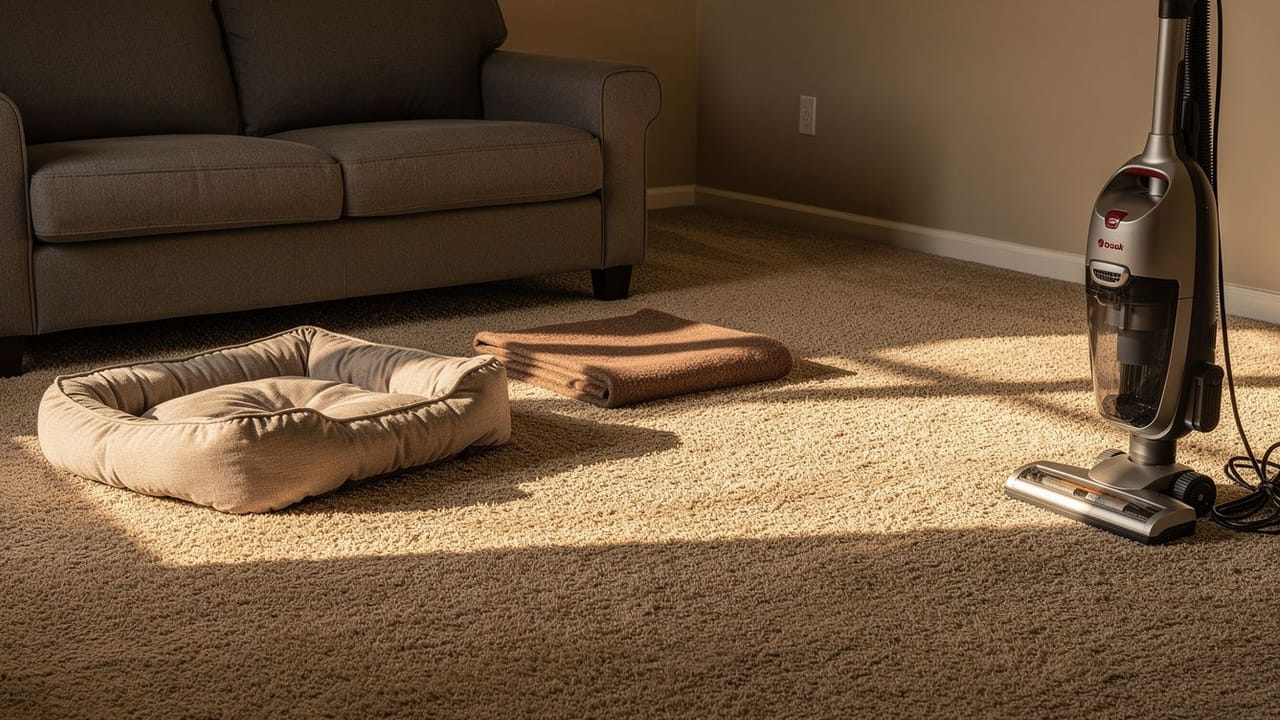
That shapes where we spray. Heavy foot traffic and sunny spots rarely hold larvae; the carpet under the sofa, the dog bed, the cat’s window seat and the upholstered chair the pet claims do. UC IPM also notes that a spray without a growth regulator often misses larvae because it never reaches the base of the fibers, and that room foggers fall short of a direct spray unless they carry one.
What has to happen on the pet, in the house and outside?
All three have to be handled in the same week, because each one restocks the others. UC IPM puts the pet first: a spot-on or oral flea product, the kind veterinarians carry, alongside regular cleaning of the places the pet rests. We do not treat animals; that part belongs to your vet, and it needs to start when the house is treated, not after.
In the house, the vacuum does more than people expect. UC IPM recommends vacuuming floors, rugs, upholstery and baseboard cracks daily or every other day, because it kills larvae in the carpet, picks up adults and coaxes waiting adults out of their cocoons while the treatment is still active. Pet bedding gets washed in hot, soapy water at least weekly. The label of the product we use sets how long people and pets stay off the treated carpet, which our post on staying out after a treatment covers.
- On the pet: a veterinarian’s flea product, started the same week
- In the house: a growth-regulator spray where the pet rests, then daily vacuuming for two weeks
- Outside: the shaded spots where the pet lies, under the deck and along the foundation, opened to sun where possible
Fleas with no pet in the house
Fleas in a house with no dog or cat usually point to an animal living in or under it. The school flea management plan published by Texas A&M AgriLife’s entomology program, from the University of Florida’s School IPM program, says a persistent flea problem where no pets are kept can mean rodents or other wildlife, and it names basements, crawl spaces, attics and eaves as places to check. The same plan lists rats, raccoons, opossums, squirrels and feral cats among the animals that bring fleas onto a property.
In Middle Tennessee that often means a vented crawl space with a torn screen or an opossum under the back porch. Treating the carpet alone will not hold, because the source keeps dropping eggs. We look under the house and at the eaves first, and if an animal is living there, the wildlife removal or rodent exclusion has to happen before the flea treatment will last. If you are still seeing fleas after two weeks of vacuuming, tell us what you are finding and where.
Sources
- University of California IPM, Pest Notes: Fleas (Publication 7419) — Growth-regulator sprays kill larvae but not pupae; about two weeks of emergence; cocoons last up to 12 months when cool; larval humidity and temperature; vacuuming; foggers; pet products; outdoor resting areas
- Texas A&M AgriLife Extension Entomology, IPM Action Plan for Fleas (University of Florida School IPM) — Cat flea hosts include raccoons, opossums and rodents; persistent fleas without pets point to wildlife or rodents; crawl spaces, attics and eaves to check
FAQ
Fleas Still Biting After Treatment? Why They Return — questions
How long after flea treatment are fleas gone?
Expect to keep seeing some fleas for about two weeks. UC IPM says a growth-regulator spray kills larvae but not pupae, so new adults keep emerging from cocoons for that long. Vacuum daily through those two weeks rather than spraying again, and call if numbers are not dropping by the end.
Can fleas live in carpet?
Yes. Eggs fall from the pet into carpet and bedding, and the larvae develop down at the base of the fibers, feeding on the dried blood adult fleas leave behind. They do best in protected, humid spots, which is why the carpet under furniture and around the pet’s bed matters more than open floor.
Can fleas live in the cold?
The cocoon stage can wait out cool weather. UC IPM says fully formed fleas can stay in their cocoons for up to 12 months at cool temperatures and emerge when warmth and movement signal that a host is near, which is why fleas can appear in a house that sat empty.
Do flea foggers work?
Not as well as a direct spray. UC IPM says total-release foggers do not give the coverage or lasting effect of a targeted spray unless they contain methoprene or pyriproxyfen, and sprays without a growth regulator often miss larvae deep in the carpet. Under furniture and pet beds are the spots foggers miss.
Can you get fleas without having a dog or cat?
Yes. Rats, raccoons, opossums, squirrels and feral cats can all bring fleas onto a property. A flea problem with no pet in the house usually means one of them is living in the crawl space, attic or under a porch, and the animal has to go before a flea treatment will hold.